WTM London 2026 - Calmer Halls, Better Conversations
Our first as Aim & Grace
Author:
Amy Skelding
Publication Date:
November 9, 2026
I've been to a fair few World Travel Markets over the decades, and this was easily my favourite one yet even though I think I clocked the most mileage walking the halls.
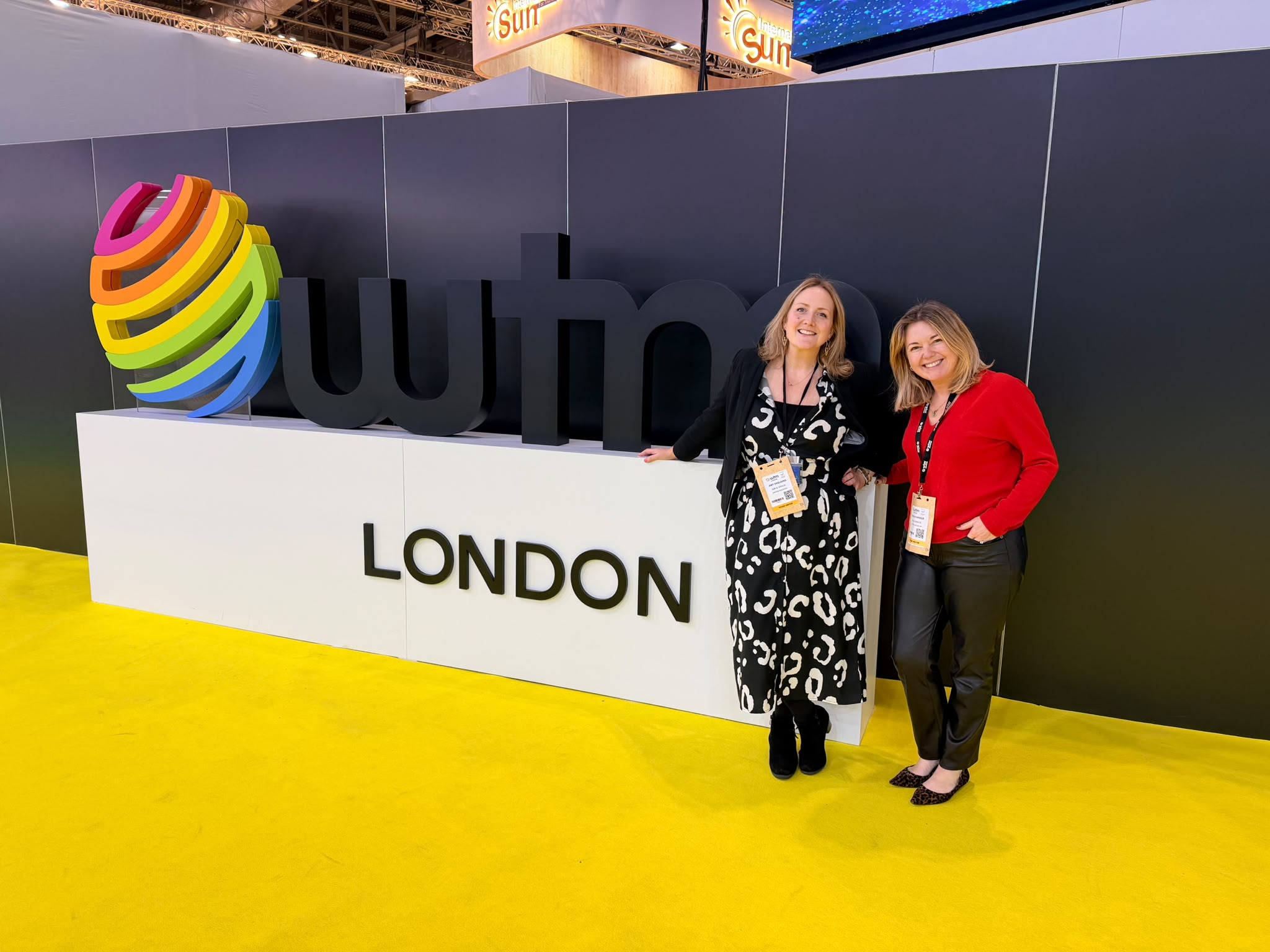
It was our first outing as Aim & Grace, and anyone who bumped into us at ExCeL will know we weren't exactly playing it cool. We were spreading joy, grinning from ear to ear and genuinely thrilled to be out meeting people under our new name. Between back-to-back meetings, speaker sessions and the evening events, we packed a lot into three days, and we came home tired but buzzing.
Calmer halls, better conversations
The show felt noticeably calmer this year. Footfall was probably a little softer than usual in part thanks to everyone having to purchase a ticket, but despite the hit on the credit card you'd struggle to find anyone complaining about it.
Pretty much everyone I spoke to said the same thing: the conversations were really positive. There was a lot of good sentiment around the halls despite the challenging year we have had in the travel industry, and plenty of people said the slightly quieter aisles actually made for a better show. You could hear yourself think (when there wasn't a sudden drumming session happening), you could find the person you'd arranged to meet, and you weren't wading through crowds of people gawping at a bird of prey.
WTM this year was about the quality of the meetings rather than the quantity of people walking past a stand. For those of us there to build relationships, that's a trade I'd take every time.
Where were the students?
One thing I did notice was that there weren't as many travel and tourism students around this year.
The immediate effect tickled me. Normally the last day is a free-for-all, with students hoovering up every pen, tote bag and keyring in sight. That simply didn't happen this time, and it left me wondering how many brands ended up packing their swag back into boxes and taking it home again.
The longer-term question is more serious. Students at WTM are the next generation of our industry, getting their first look at the people and businesses they might one day work for. I'm not sure yet what fewer of them at the show means for the talent coming through, but it's something worth keeping an eye on. That's especially true given how much of the conversation on stage was about skills, people and the human side of travel.
There was a real bright spot, though. The ITT Future You Summit was given a lot of airtime, and I was so pleased to see some of the TTG 30 Under 30 cohort taking part. I spoke at one of the suppers back last month and actively encouraged this year's 30 to put themselves forward, so it was a joy to catch up with a few of them afterwards. With a little nudge, they'd taken the plunge, and they can now officially call themselves public speakers.
Public speaking terrifies plenty of seasoned professionals, so I'm genuinely proud of them for getting past that fear. If that's what the next generation looks like, I'm feeling pretty good about it.
AI on every stage
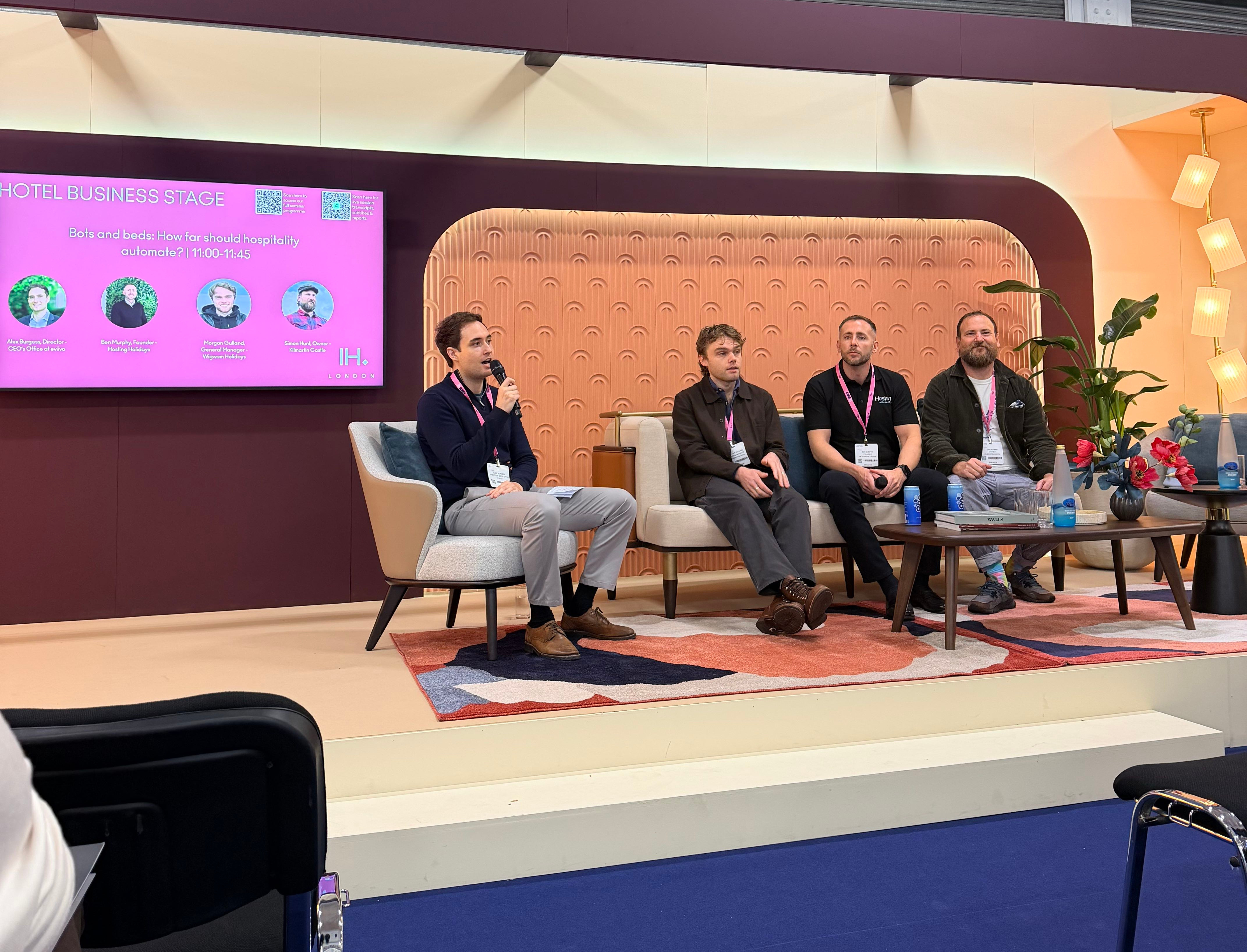
If one topic ran through the speaker programme, it was AI. The tone, though, was less 'Terminator is coming' and more 'get your own house in order first'. Of the roughly 20 sessions about AI, these are the points that stuck with me.
We obviously couldn't get to every single speaker session, so the AI-generated session notes made available afterwards were incredibly useful. I spent the weekend going through them and catching up on the bits I'd missed, and I'd highly recommend anyone digs them out and has a nosy. You'll find them on the WTM London 2026 Synopsis site.
Most of the industry isn't ready yet
Apparently only 9% of travel businesses are ready for AI-driven bookings. That figure came out of the 'Everything Is Changing and Nothing Has Changed' panel, with Uli Pillau of Apaleo, Maria Non Foerster of RightRez and moderator Timothy O'Neil-Dunne. It's a sobering number, given how quickly travellers are already using these tools to plan trips.
Martin Rosenberg of Overseasinfo.tv had a practical answer: treat AI like an employee. Give someone clear responsibility for keeping it trained and fed with current information. He also reckons leisure travellers won't hand booking decisions over to AI entirely, because emotion plays too big a part in choosing a holiday. Business travel may well get there first.
Being found is no longer enough
Being data nerds, we loved that Carlo Del Mistro of Stiplo ran nearly 40,000 AI queries across Barcelona and London. He found that many hotels are invisible to AI, and that a small share of properties get most of the mentions. Most clicks from AI answers go to Google Hotel listings rather than hotel websites, so Google reviews and an up-to-date profile matter more than ever. The good news for independents is that they can beat the chains by owning a specific trip purpose, rather than trying to appear everywhere.
Sia Mabadi of Profound took this a step further. Being seen in AI search isn't the goal any more. The real question is whether the AI describes you accurately and favourably, particularly as these tools increasingly add opinions nobody asked for alongside the answer. For anyone in PR and communications, that's a new front in reputation management.
East and West are taking different roads
The 'Search is Over: East vs West' panel compared two very different models. In China, platforms such as Rednote and Alibaba already handle the whole journey in one place, from inspiration through to payment. The West is more fragmented but catching up through AI agents. In both cases, trust and authentic user content are what hold everything together.
Follow the money
At the 'Money Talks' session with Filip Filipov of OAG and Virendra Jain of Videc, we heard that nearly $150bn has gone into travel tech over the past 11.5 years. Whatever happens next, the investment is already there. And just wandering around the Travel Tech section (for those that didn't find it, it was tucked away near the Prince Regent exit), you realise how big the sector has become and it was buzzing, even on the Thursday.
Don't hand over your brain
A brilliant keynote by Graham Lovelace covered 'cognitive surrender', a phrase I will certainly be using from now on. His argument was that relying too heavily on AI means we gradually lose our critical thinking, memory and creativity. We also trust AI more because it sounds human, which leads us to lean on outputs that are often flawed. His answer was to hold on to what's ours: authenticity, empathy and lived experience.
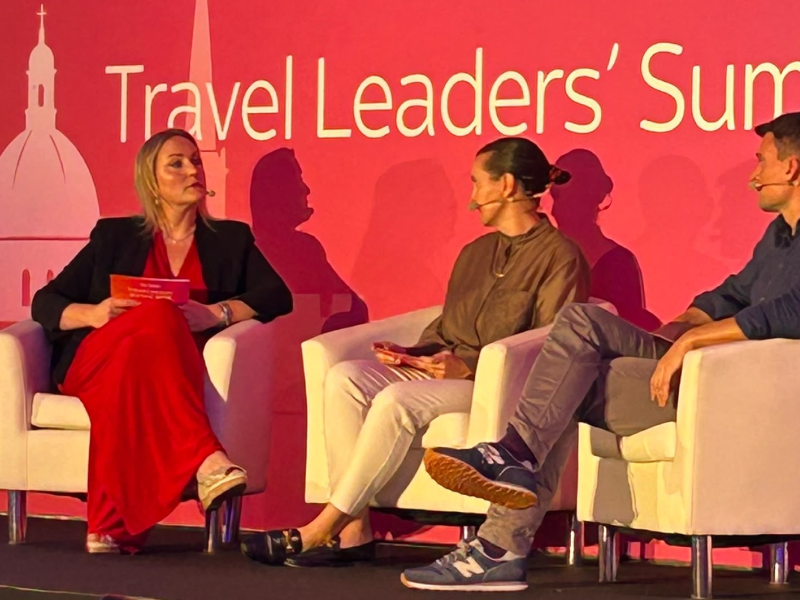
'The Talent Gap AI Cannot Fix' panel, with Professor Stroma Cole, Professor Terry Stevens, Fritz Müller and moderator Rita Jusztina Varga, put it another way. The future belongs to 'hybrid thinkers' who combine AI efficiency with storytelling and empathy. Which, frankly, is a relief for those of us who earn a living telling stories and happen to really like human interaction.
Same time next year?
For me, everything from the stage tied neatly to how the show felt on the floor. For all the talk of agents, algorithms and AI search, the best bits of WTM 2026 were the human ones: proper conversations, people with time to listen, and a lot of goodwill despite the harsh industrial lighting.
Thank you to everyone who stopped for a chat, shared a coffee/overpriced wine or invited us to one of the many brilliant evening events. It was a joy to launch Aim & Grace among such a brilliant crowd. I did the count (as is tradition) and racked up over 40,000 steps which is just shy of 20 miles in 3 days, so spent the weekend in my slippers and grateful for the rest.
If we didn't manage to catch you, or you'd like to talk through any of these themes, from AI search (shameless plug for our recent AI research of course) to what it means for your brand or destination story, get in touch. We're always happy to chat.